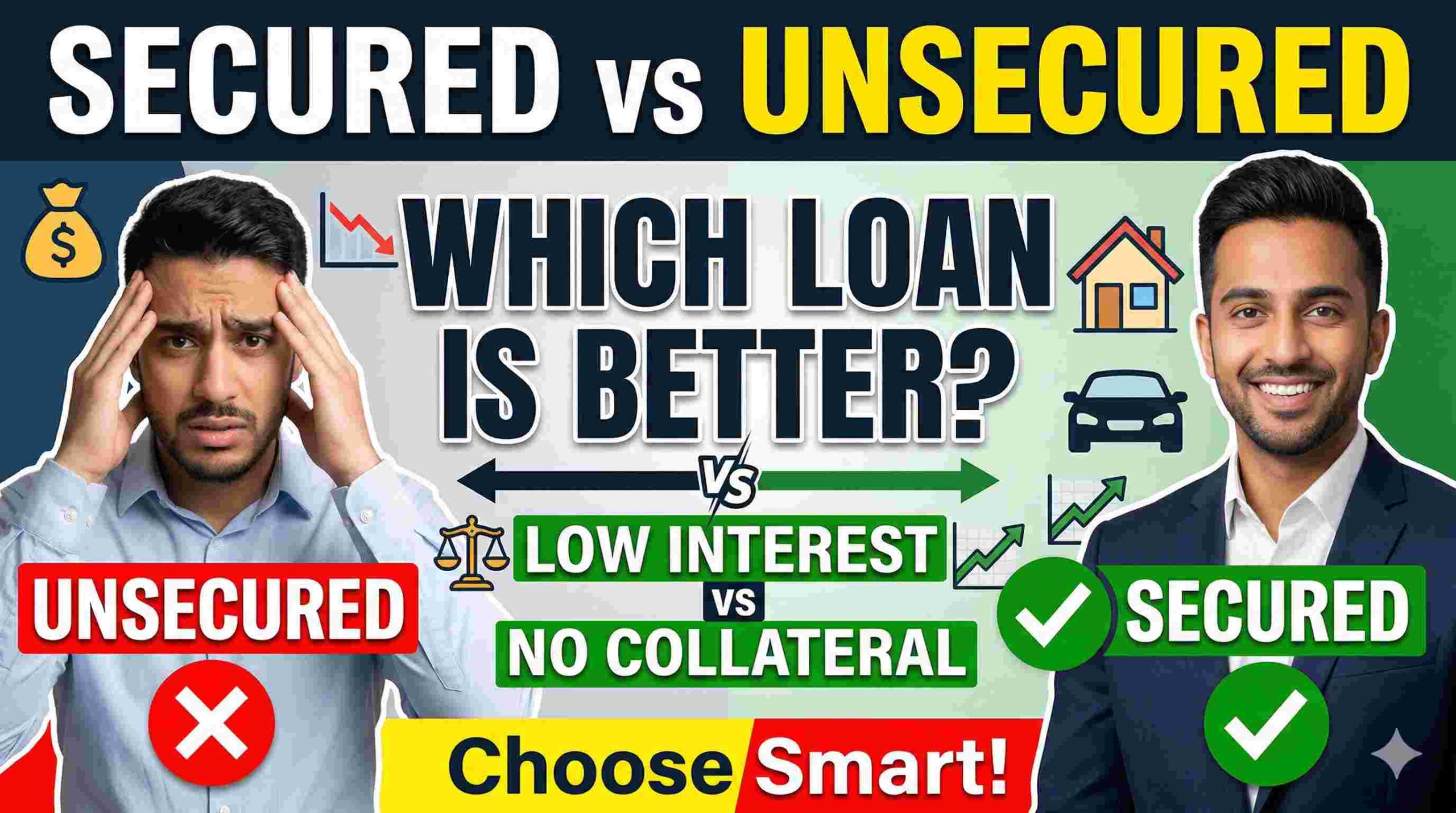
When you find yourself in need of extra funds—whether it is to consolidate high-interest credit card debt, cover an unexpected medical emergency, or finance a major home renovation—a personal loan is often the smartest financial tool available. In 2026, the U.S. lending market offers more personal loan options than ever before. However, before you sign on the dotted line, you have to make one critical decision: should you apply for an unsecured personal loan or a secured personal loan?
While both loan types provide you with a lump sum of cash that you repay in fixed monthly installments, they operate on completely different rules regarding risk, interest rates, and borrowing limits. Choosing the wrong type of loan can lead to higher costs or, in the worst-case scenario, the loss of your valuable assets.
In this comprehensive guide, we will break down the exact differences between unsecured and secured personal loans, the pros and cons of each, and how to determine which option is the best fit for your specific financial situation in 2026.
What is an Unsecured Personal Loan?
An unsecured personal loan is a loan that requires no collateral. You do not have to pledge your car, your home, or your savings account to get the money.
Because there is no physical asset backing the loan, the lender takes on 100% of the financial risk. If you default on your payments, the lender cannot simply seize your property. Instead, they must rely on the legal system to recoup their losses, which often involves sending your account to a collections agency and severely damaging your credit score.
To offset this high risk, lenders rely heavily on your financial history. They will deeply scrutinize your FICO credit score, your debt-to-income (DTI) ratio, and your employment history. Unsecured loans are the most common type of personal loan offered by online lenders, banks, and credit unions today.
Pros of Unsecured Loans
- Zero Asset Risk: Your personal property (like your house or vehicle) is completely safe. If you hit a financial hardship and cannot pay, you will damage your credit score, but you won’t lose the roof over your head.
- Fast Approval and Funding: Because the lender does not need to appraise the value of any collateral, the underwriting process is incredibly fast. Top online lenders in 2026 can often approve and fund an unsecured loan within 24 to 48 hours.
- Fewer Restrictions: You can generally use the funds from an unsecured loan for almost anything, from debt consolidation to paying for a wedding.
Cons of Unsecured Loans
- Higher Interest Rates: Since the lender carries more risk, the Annual Percentage Rates (APRs) are naturally higher compared to secured loans. If you have bad credit, unsecured loan rates can easily exceed 30%.
- Stricter Qualification Requirements: You generally need a “Fair” to “Excellent” credit score (typically 600 or higher) and a steady, verifiable income to get approved for favorable terms.
- Lower Borrowing Limits: Unless you have an exceptional credit profile and a high income, lenders will typically cap unsecured loans at around $40,000 to $50,000.
What is a Secured Personal Loan?
A secured personal loan requires you to provide collateral—a valuable asset that you pledge to the lender to back the loan.
Common types of collateral used in 2026 include:
- Your vehicle (Auto title loans or standard secured loans using a car’s equity)
- A savings account or Certificate of Deposit (CD)
- Investment accounts
- Home fixtures or equity (though this often crosses into Home Equity Loan territory)
If you fail to make your monthly payments and default on the loan, the lender has the legal right to seize your collateral, sell it, and use the proceeds to pay off your remaining debt. Because the lender has this safety net, their risk is drastically reduced.
Pros of Secured Loans
- Easier to Qualify For: If you have bad credit or a “thin” credit file, a secured loan is much easier to get. The collateral serves as proof of your commitment to repaying the debt.
- Lower Interest Rates: Because the lender is protected by your asset, secured loans offer significantly lower APRs than unsecured loans. This can save you thousands of dollars in interest over the life of the loan.
- Higher Borrowing Limits: If you pledge a highly valuable asset, lenders are willing to let you borrow much larger amounts of money.
- Great for Credit Building: Consistently making on-time payments on a secured loan is one of the fastest ways to rebuild a damaged credit score.
Cons of Secured Loans
- Risk of Losing Your Property: This is the ultimate drawback. If you lose your job or face an emergency and cannot make your payments, the bank will repossess your car or drain your savings account.
- Slower Approval Process: The lender must physically or digitally verify the ownership and exact value of your collateral (like appraising your vehicle), which makes the funding process slower than an unsecured loan.
- Asset Restrictions: While the loan is active, the lender places a “lien” on your collateral. You cannot sell your car or close your savings account until the loan is paid off in full.
Key Differences at a Glance
To make it easy to compare, here is how unsecured and secured loans stack up in the current 2026 financial market:
- Collateral: Unsecured (None) vs. Secured (Required).
- Interest Rates (APR): Unsecured (Higher, based entirely on credit score) vs. Secured (Lower, based on collateral value).
- Funding Speed: Unsecured (1 to 2 business days) vs. Secured (Can take several days to a week).
- Credit Requirement: Unsecured (Usually requires a 600+ FICO score) vs. Secured (Accessible for subprime borrowers below 580).
Which One Should You Choose?
Deciding between an unsecured and a secured personal loan comes down to your current credit score, how much money you need, and your personal risk tolerance.
Choose an Unsecured Loan If:
- You Have Good to Excellent Credit: If your FICO score is above 680, you will likely qualify for highly competitive interest rates on an unsecured loan anyway, making it pointless to risk your personal assets.
- You Need Money Immediately: If you are facing an urgent emergency and need funds deposited into your checking account by tomorrow morning, an unsecured online loan is your best and fastest option.
- You Do Not Own Valuable Assets: If you do not own a car outright or do not have a robust savings account to pledge, an unsecured loan is your only logical choice.
Choose a Secured Loan If:
- You Have Bad Credit: If traditional banks and online lenders keep rejecting your applications due to a low credit score, a secured loan (like a savings-secured loan from a local credit union) is the most effective way to secure funding.
- You Need to Borrow a Massive Amount: If you need $75,000 but your income does not support an unsecured loan of that size, pledging collateral can bridge the gap.
- You Want the Lowest Possible Rate: If you are comfortable taking on the risk and want to pay the absolute minimum in interest charges, secured loans will always beat unsecured loans in head-to-head APR comparisons.
Conclusion: Making the Smart Financial Move
In 2026, both unsecured and secured personal loans serve distinct, valuable purposes. An unsecured loan offers peace of mind and lightning-fast funding, making it the go-to choice for borrowers with strong credit profiles. Conversely, a secured loan acts as a powerful financial bridge for those looking to rebuild their credit or secure massive loan amounts at rock-bottom interest rates.
Before applying for either, use a loan comparison tool to pre-qualify with multiple lenders. This allows you to check your rates without hurting your credit score. Carefully weigh the monthly payments against your budget, and never pledge an asset you cannot afford to lose.